Intro.
Out of the many, many sea creatures that call the ocean their home, none are more widely known as a predator than a shark, and not any shark, but a Great white shark.

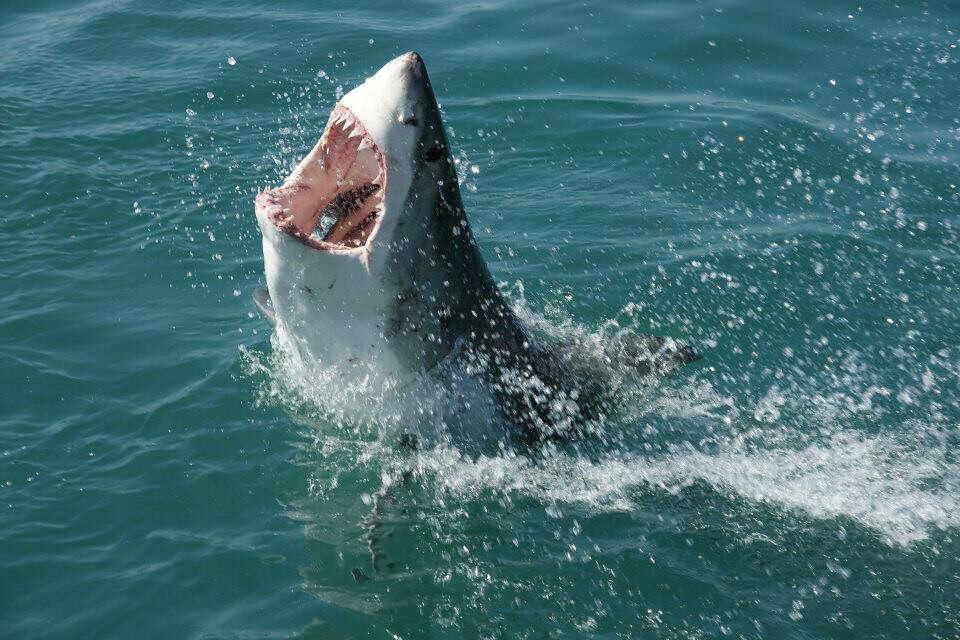
“Great White Shark in South Africa” by travelbagltd is licensed under CC BY 2.0.
This picture, (Above) looks like a killer, but I am sure it has only killed fish and other prey, specifically non-human cuisine. So today we are talking about the famous shark that has been haunting dreams since the misconceptions started.
The physical facts.
Okay, to start off on this fact tsunami, Te great white sharks scientific name is Carcharodon carcharias, and they are the largest predatory fish on Earth. Cool right? Adults usually can reach lengths of around 11 to 16 feet, but some can grow even larger, and they can weigh well over a ton. Great Whites live in oceans all over the world, and as predators, their diet changes as they grow older. Younger great whites usually like to eat fish and manta rays, while adults focus more on marine mammals cuisine such as seals and sea lions. When hunting, they rely on stealth and surprise. A common strategy they use is to attack from below, using speed and force to disable prey. Interestingly, they often bite once and then back away, waiting for the prey to weaken before returning, which reduces the risk of injury to the shark itself.

“Great White Shark” by Elias Levy is licensed under CC BY 2.0.
Teeth.
Sharks have teeth constantly growing in their mouth. An adult great white tooth can reach about two to three inches in length, and the jagged edges work like a knife to slice through prey such as seals and sea lions. Instead of chewing, great whites bite off chunks of meat and swallow them whole. These sharks constantly replace their teeth throughout their lives. Rows of teeth that are still being made sit behind the active ones, and when a tooth breaks or falls out, another quickly moves forward to take its place. Over a sharks lifetime, a great white shark can go through tens of thousands of teeth. Great white shark teeth are made of dentin instead of true bone, which makes them really strong and resistant to decay. Because a sharks bones are mostly made out of cartilage, and cartilage does not fossilize very well, teeth are often the main evidence scientists have of ancient sharks.

“Great White Shark” by Elias Levy is licensed under CC BY 2.0.
Shark types.
There are many different types of sharks but these are some of them: Tiger shark, Bull shark, Mako shark, Thresher shark, Whale shark, Basking shark, Nurse shark, Reef shark, Frilled shark, Cookiecutter shark, Blue shark, Angel shark, Wobbegong, Blacktip shark, White-tip reef shark, Goblin shark, Leopard shark, Sand tiger shark, Hammerhead shark.

“File:Chinese cuisine-Shark fin soup-01.jpg” by chee.hongis licensed under CC BY 2.0.
Threats.
Though I think sharks are awesome, many shark species are targeted for their meat, fins, or cartilage. Sharks are also sometimes caught by accident in nets being dragged across the ocean floor. In cases where they are farmed for their fins, the shark’s fins are cut off with a blade, and the body is thrown back into the sea. Sharks cannot survive without moving, so without their fins to steer them and their tail to move them, they will ultimately die. Sharks and their fins are used for many things. For instance, the skin can be used for the cases of iPhones. Skins are also used for the very popular fin soup. Fins are also used for makeup for some reason. All of this exempt the fin soup part goes for the rays too and shockingly this all leads up to three sharks and rays being killed every second. Also, if you ned to learn more, go to the New York aquarium, it’s a reliable source. Specifically the shark exhibit. And kids love the playquarium. The spineless exhibit is good too, along with the sea lion show.

“White Cheek Shark Slaughtered for the Illegal Shark Fin Trade” by USFWS Headquarters is marked with Public Domain Mark 1.0.
Success conservationists have made so far.
The Galápagos Marine Reserve, established in 1998, gives the sharks strict protection for multiple shark species, including hammerheads and whale sharks. In the United States, federal bans made on shark finning and limits on bycatch have reduced mortality in species such as sandbar, blacktip, and scalloped hammerhead sharks. Sharks reproduce really slowly, so even a small act is a huge difference. I think these are amazing feats, but illegal finning is still going on in oceans today, so there are still so many things that need to be fixed!

“Sharks, Sea turtle; New York Aquarium” by jschauma is licensed under CC BY 2.0.
the daily life.
Sharks need to always move to sleep so a great white shark’s daily life is mostly quiet. Adult great whites spend lots of theme out of their day swimming steadily through their territory or along migration routes. Sharks don’t really sleep like we do, instead. They slow down, glide, but still remain utmost alert so they can still breathe. Mostly sharks use their senses to find potential food and sense danger if necessary.
When food is available, the adult Great white may focus a lot on haunting for a short period of time then go without days of food. After a big meal, maybe a seal, the shark usually goes to deeper or calmer water to digest the food. They get curious very easily and may investigate unfamiliar objects or animals, including boats, sometimes by circling. Outside of hunting, their lives involve swimming long distances, which helps them patrol feeding areas and migrate between seasonal hotspots for food and other places of need.

“Great White Shark” by Elias Levy is licensed under CC BY 2.0.
Pups.
Baby great white sharks are called pups. From the moment they are born, they are completely on their own. There is no parental care from their mother, and in fact, adult sharks can be a danger to them. Adults may eat them of kill them to get them out of their territory. Because of this, pups usually stay in shallow coastal nursery areas where there is plenty of small prey that they an eat and less large predators. Their daily life is focused on survival—finding small fish and rays to eat while avoiding bigger sharks, that, as I have mentioned before, will kill them easily.
Young great whites are far more active than one might think. They hunt often because they need regular energy to grow, and they rely very much on instinct. Over time, they learn the best places to catch fish, avoid large predators, and be safe. As they grow bigger and stronger, they gradually move into deeper waters and begin transitioning toward the lifestyle of an adult great white shark.
Pups and adults spend much of their lives alone, only coming together for short periods of time to mate or maybe a territorial fight. They have strong power, and they use their strength to live efficiently in their lives, that is what I think let them live as apex predators for so long.

“Great white shark south africa” by Hermanus Backpackers is licensed under CC BY 2.0.
Origins.
Sharks have an incredibly long and ancient history that goes farther back before dinosaurs ever existed. The first shark-like fish appeared more than 450 million years ago, during the Silurian Period. These (Very) early ancestors were quite simple compared to the modern sharks, but they already had key features such as cartilage skeletons instead of bones, which made them lighter and more flexible in the water. As more time passed, sharks became much, much more diverse and extended through the world’s oceans, becoming more and more powerful as they spread. During the Devonian Period, usually called the “Age of Fishes,” sharks evolved into many different interesting forms, some with extremely strange body shapes and very unusual teeth. They sometimes looked weird but still so cool. One of the famous early sharks, Cladoselache, was very fast and sleek, while others had spines on their heads or crushing teeth designed for killing hard-shelled prey.

“Great White Shark” by Elias Levy is licensed under CC BY 2.0.
Sharks survived multiple mass extinction events that wiped out thousands of other species. The extinction that killed the dinosaurs almost 66 million years ago had only little long-term effect on sharks, and they continued to evolve and adapt as if nothing was wrong. One of the most famous prehistoric sharks was Megalodon, which lived between about 23 and 3.6 million years ago. Megalodon was humongous, very much larger than today’s great white shark, and probably ate and fed on whales and other huge marine animals. But megalodon would have probably been scary if they were around today.

“Great White Shark” by Elias Levy is licensed under CC BY 2.0.
Thank you, I hope you enjoyed this blog post, or it helped you in any way!
— Gloryrules!
Comments
2 responses
Hiiiiiiiiiiiiiiiiiiiiiiiiiiiiii
Hi Gloryrules!