Intro.
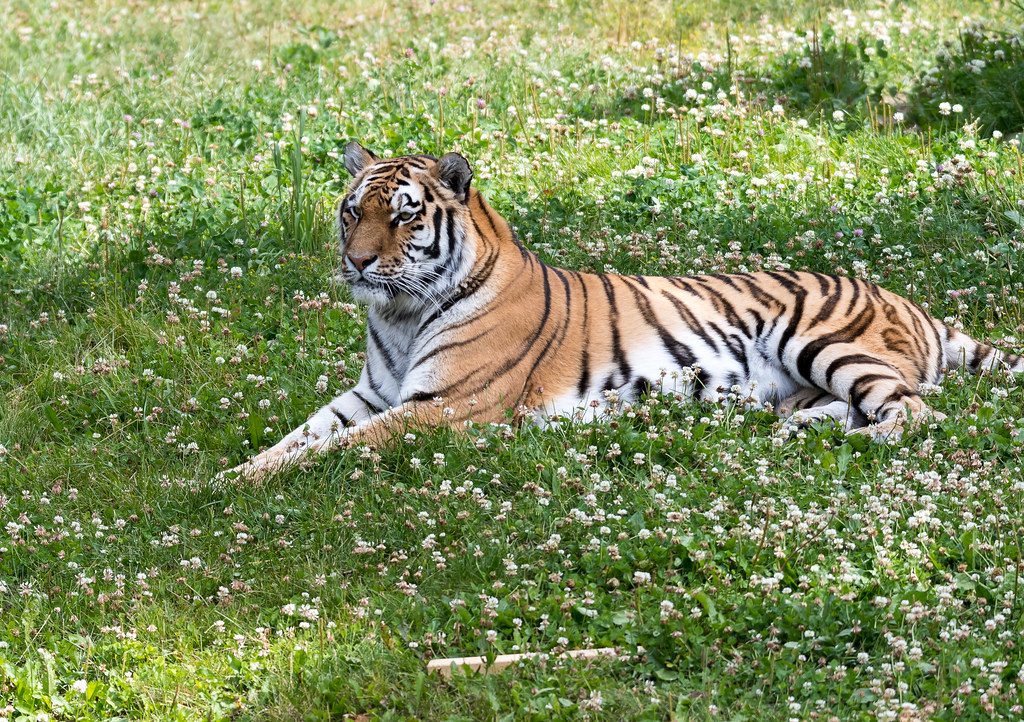
The Siberian Tiger is one of the most well-known tigers in the world, with its beautiful iconic stripes and fierce look in its eyes. Its scientific name is Panthera tigris altaica. A male would weigh about 397-675 pounds, which is about 180-306 kg, while a female would weigh about 220-368 pounds, which is 100-167 kg. The Siberian tigers live in forests, specifically in Eastern Russia and China.

“Siberian Tiger” by Mathias Appel is marked with CC0 1.0.
Hunting.
They are amazing hunters, and they have fast, slender, and agile bodies made to twist and turn with the slightest move. They mark their territory like most big cats, with urine, Scratches on trees, and scent markers. Then they hide cleverly near where they know that prey frequently pass by or use and wait for the perfect time when the prey is unaware that the Tiger is there, then pounces; finally the big cat gets their meal, which is usually deer, wild pigs, or salmon.

“Siberian Tiger” by Mathias Appel is marked with CC0 1.0.
They will also frequently hunt bears. They have strong jaws to deliver bone-smashing bites and huge claws as well as powerful forearms. Sometimes they eat prey that was already hunted by other predators, though they do not do it often. Siberian tigers are solitary and territorial animals, each adult patrolling a range that can span hundreds of square miles. Because prey is more scattered in these northern regions, Siberian tigers must prowl larger amounts of land to get their meals.

Highsmith, Carol M, photographer. Tiger itches, tiger scratches at the Wild Animal Sanctuary, a 720-acre animal refuge housing more than 350 large animals near Keenesburg, Colorado. The sanctuary specializes in rescuing and and caring for large predators that had being ill-treated. Keenesburg United States Colorado, 2016. -07-29. Photograph. https://www.loc.gov/item/2017885576/.
They also swim, unlike most cats who hate water. this sometimes helps with hunting animals drinking water in lakes and sometimes, rivers. This, as I have said before, is very unusual for a cat since if you have a cat, and you have not trained it to like water or it’s breed likes water, you will know that cats HATE water unless they chose to get wet themselves.

“Siberian Tiger” by Mathias Appel is marked with CC0 1.0.
Threats.
Unfortunately, tigers get hunted for a lot of reasons like the fact that their fur used for fashion and made into rugs, their teeth used for charms and jewelry as well as accessories, and their bones and teeth can both be turned into a powder and used to make a famous medicine said to have magical properties.

“Siberian Tiger” by Mathias Appel is marked with CC0 1.0.
Some people have acquired tigers from illegal sellers. Most of these Tigers are not actually “Real” Tigers since they are illegally bred from illegally caught Tigers. At least one in five dies and their DNA is very messed up mostly due to parents and children being bred together and such, has resulted in multiple Baby Tigers dying due to instability of DNA.
The saddest part is that most are babies and most are failed attempts at breeding more Albino or “white” tigers. Some people have posted pictures of their “pet” Tigers on the internet causing a scandal. Some Babies who are especially good looking are put in the hands of illegal advertisement staff who go around letting people pet these wild animals. But after they have grown up, the staff will either put the Tiger into a cage for the rest of its life or be sold off.

“Siberian Tiger, Swimming” by Ber’Zophus is licensed under CC BY-SA 2.0.
Unknown legends.
The Siberian tiger is the only tiger very well known. Some people do not even know that there are different types of Tigers at all! But there are a few, or at least there are at the time I post this. But if you are reading this, maybe in a few years, there may be only one or two types of tigers left in the wild. This is how much is at stake. This is a very big risk and tigers are going to go extinct if we do not have enough land for them to live in. Tigers need a LOT of territory for them to fill their humongous appetites. And even if we did have that much land, it’s going to be hard for us to live in harmony with these striped cats in the future.

“Siberian Tiger” by Mathias Appel is marked with CC0 1.0.
Conservation.
In 2015, There were less than 450 Siberian Tigers left in the wild. Organizations and many other people have fought to keep this unique species on our blue and green planet. Thanks to them and all of the people who fundraised for the species, They have been recovering from the huge blow. It will take a long time to heal, and we will need to not hurt the species more while we do so, But we might be able to eventually learn to live with them until then.

Siberian Tiger” by Mathias Appel is marked with CC0 1.0.
Mating season and babies!
Mating season for the Siberian tiger is a rare and quiet happening, hidden deep within the cold forests where snow muffles every step of any animal and only the wind makes a sound, as it carries the gentle falling snowflakes. Unlike the bold roars of lions or the large social groups of other cats, Siberian tigers live solitary lives — and when two adults come together, it’s usually brief and strictly for reproduction. Mating can occur any time of year, but it’s most common in the late winter months, when the cold air is sharp and the forest is nearly still.

“Free Siberian tiger image” is marked with CC0 1.0.
Though Siberian tigers don’t have a strict breeding calendar, most mating occurs between December and February, in the dead of the Russian winter, when the forest is silent and blanketed in snow. During this time, a female enters estrus — a fertile phase that lasts only 3 to 7 days. She will leave scent markings — claw marks on trees, urine trails — and may vocalize to alert any nearby males. If a male picks up her signal, he’ll track her through the markings she leaves behind.

“Siberian tigress baby” is marked with CC0 1.0.
After mating, The male leaves, and the tigress returns to being alone preparing to raise her cubs alone. After a time of about 3.5 months, she gives birth — usually between May and June— in a hidden den tucked among roots, rocks, or fallen trees, where 2 to 4 cubs are born blind, tiny, and completely dependent.
These tiny cubs arrive into the world blind, helpless, and usually as big as a loaf of bread. Their mother, VERY protective and completely alone, stays by their side for the first several weeks, only leaving briefly to hunt for food. In these early days, To the cubs, this is their entire world until they come out of the darkness for the first time but for now this is all they know about— the warm, dark, and silent. It’s quiet except for the soft whimpers of cubs and the sound of their mother’s breath. As the weeks pass, their eyes open and they begin to crawl, then stumble, then play to test their strength to survive when they grow up.
Thanks for reading! This is the end of this post!
— Gloryrules!