intro.
Dolphins are playful and curious creatures who inspire thousands in coastal areas and beyond. They love to use objects and other animals to play and are very cute. So toady we are diving into that. Let’s go!

“Dolphins” by ryn413 is licensed under CC BY 2.0.
Where they live.
Dolphins live in many different places around the world. Most dolphins live in saltwater oceans, especially in warm and tropical areas like the Atlantic, Pacific, and Indian Oceans. Some species also live in cooler ocean waters near the coast. Dolphins can be found in places such as bays, coral reefs, beaches, estuaries, and the open ocean. A few types of dolphins live in freshwater rivers instead of the ocean. These river dolphins live in places like the Amazon River in South America and the Ganges River system in Asia. Dolphins choose habitats where they can find plenty of food, clean water, and safe places to swim with their pods. Different dolphin species live in different habitats because each one has its own needs.

“Dolphin [P6262297-156-1]” by RC_Fotos is licensed under CC BY 2.0.
what they eat.
Dolphins have an energetic diet that keeps them strong and active in the ocean. They mainly eat fish and squid, but they also feed on shrimp, crabs, and sometimes octopuses when they are available! They really can eat many things! What they eat depends on their habitat and the type of food they can find in their area. Dolphins are skilled hunters that use echolocation to locate prey even in dark or unclear water! Many dolphins also hunt in groups, working together to catch fish more efficiently. They do not chew their food; instead, they grab it and swallow it whole.
species.
Dolphins belong to a group of animals called Cetacea, which also includes whales and porpoises. Even though there are many different kinds of dolphins, they are all in the same group because they share similar traits and are related. Some common dolphin species are the bottlenose dolphin, spinner dolphin, and common dolphin! These dolphins may look different in size, color, or behavior, but they still belong to the same larger group. All dolphins live in water, breathe air using lungs, and give birth to live babies instead of laying eggs. Scientists use groups like Cetacea to help organize animals and show how they are connected. This is used for other animals too, like felines, canines, and other species!

“Dolphin Crest” by jurvetson is licensed under CC BY 2.0.
Dangers.
Dolphins face many dangers in their environment that make it harder for them to survive. One big problem is pollution, like plastic and chemicals in the ocean, which can hurt dolphins and other sea animals. Another issue is overfishing, which means people catch too many fish, leaving less food for dolphins. Boats and ships can also be dangerous because dolphins can get hit or disturbed by them. Climate change is another threat because it can warm the ocean and change where fish live! Loud noise from boats and machines can also make it hard for dolphins to talk to each other and find food! All of these problems can harm dolphins and their ocean home!

“Dolphin Jump” by ajmexico is licensed under CC BY 2.0.
pods.
Dolphins live in close family groups called pods! These pods can be small or large, and they often include mothers, babies, and other dolphins that stay together for protection and support. Dolphins care for their young and teach them important skills like finding food and staying safe. Family members in a pod work together to hunt, communicate, and protect each other from danger. Baby dolphins stay with their mothers for a long time while they grow and learn how to survive in the ocean!

“Wild Dolphin Play” by jurvetson is licensed under CC BY 2.0.
How dolphins start their lives.
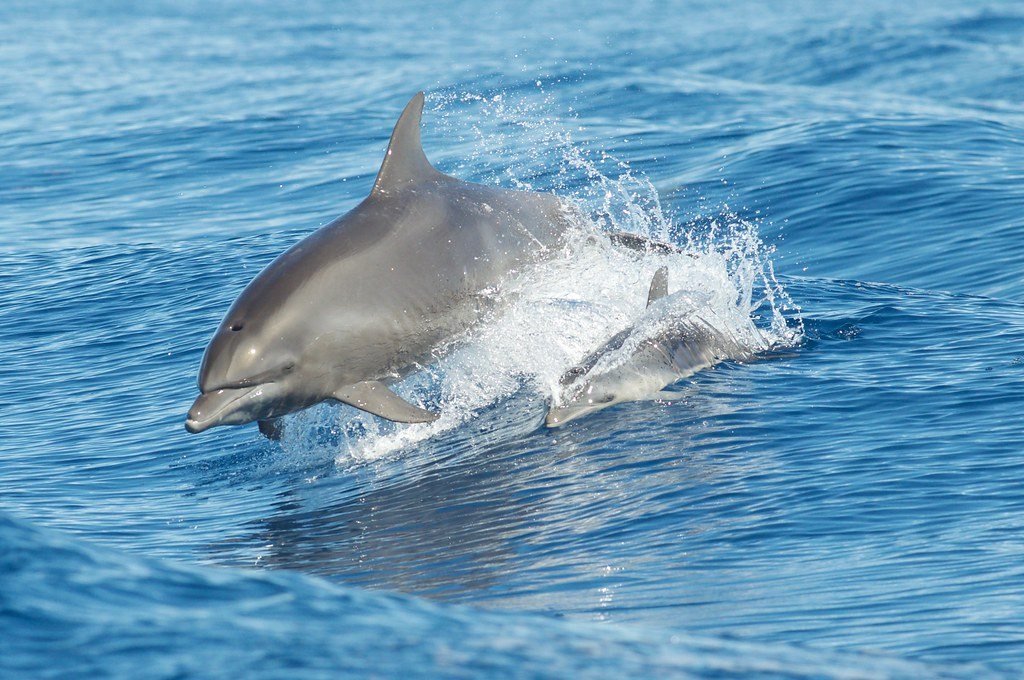
Dolphins are born in the water after a long time growing inside their mother. The mother carries the baby dolphin for about 10 to 17 months, depending on the species. When it is time to be born, the baby usually comes out tail first to help it breathe quickly. Right after birth, the baby dolphin swims to the surface to take its first breath of air! Baby dolphins, called calves, stay very close to their mothers for safety and milk. The mother feeds the calf with milk and helps it learn how to swim, find food, and stay safe in the ocean. Dolphins give birth to live young instead of laying eggs, which makes them mammals!

“Atlantic Bottlenose Dolphins” by btrentler is licensed under CC BY 2.0.
Life stages.
Dolphins go through several life stages as they grow. They start as babies called calves, which depend on their mothers for milk, protection, and learning basic survival skills. As they grow into juveniles, young dolphins become more independent and begin practicing hunting and social skills with their pod! At this stage, they still stay close to their group for safety. Once they become adults, dolphins are fully grown and can hunt on their own, travel long distances, and sometimes have their own calves. Adult dolphins also play an important role in protecting and guiding younger members of the pod!